



Understanding how worms impact your feline friend isn’t just good knowledge; it can be lifesaving. Cat worms are among the most common parasitic infections pet parents encounter, and left untreated, they can cause serious health problems for your cat… and even, in some cases, for humans too.
Whether you’re a seasoned pet guardian or a new cat owner, this guide will walk you through:
- What worms are
- How cats get infected
- Types of worms
- Symptoms to watch for
- Veterinary diagnosis and treatment
- Prevention and ongoing care
Plus, we’ll tie in how preventive care and routine grooming services offered at Dashing Dawgs Grooming and Boutique, and regular health maintenance partnerships with Dashing Dogs Dental, play a major role in keeping your cat worm-free.
What Are Worms in Cats?
“Worms” refers to parasitic organisms that live in or on your cat, most commonly inside the gastrointestinal tract. These parasites feed off your cat’s nutrients, often causing clinical signs ranging from mild digestive upset to serious systemic illness.
Cats can acquire these parasites in a variety of ways, from mother to kitten, from the environment, via intermediate hosts (like fleas), or through hunting and eating infected prey.
How Do Cats Get Worms?
Cats are exposed to parasite eggs or larvae in several common scenarios:
✔ Mother–kitten transmission. Kittens can acquire worms from their mother’s milk or before birth.
✔ Ingestion of eggs or larvae. Worm eggs can exist in soil, litter, or on surfaces your cat contacts.
✔ Infected fleas or prey. Eating a flea during grooming or a rodent harboring worms introduces parasites directly into your cat’s gut.
✔ Outdoor exposure. Cats allowed outside are at higher risk due to contact with contaminated environments and hosts.
Common Types of Worms in Cats
Worm infestations aren’t all the same; each type has its own transmission, lifecycle, and clinical impact:
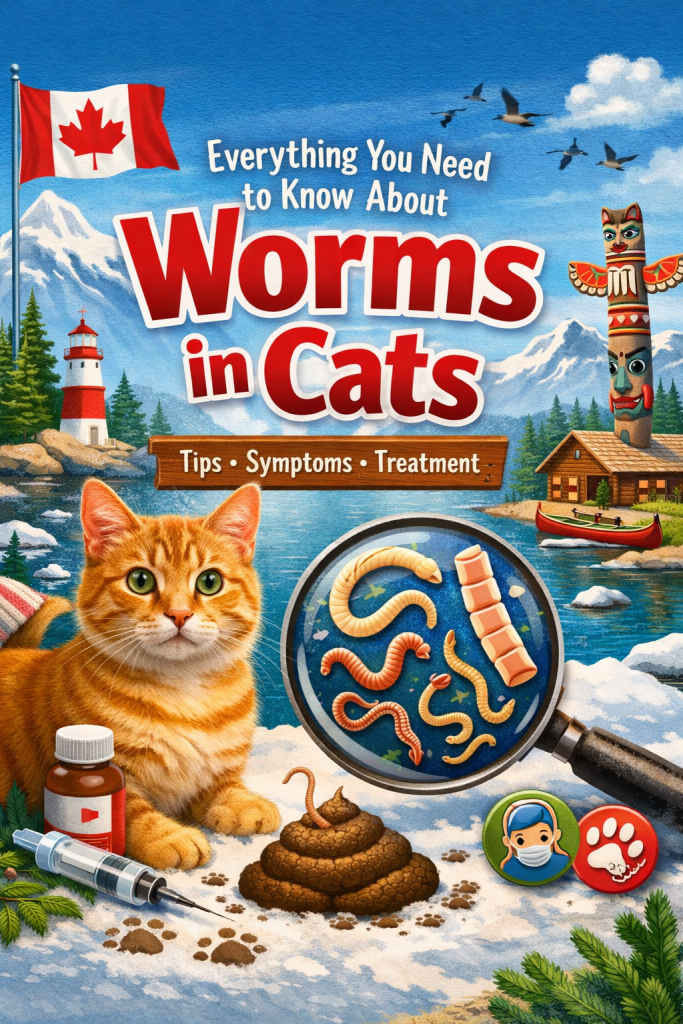
Roundworms
- The most common intestinal worm in cats.
- Can grow 3–6 inches long and resembles spaghetti.
- Causes digestive problems, vomiting, diarrhea, and pot-belly appearance in kittens.
Hookworms
- Tiny worms that attach to intestinal walls and feed on blood.
- May lead to anemia, pale gums, weight loss, and weakness.
Tapeworms
- Transmitted through fleas or infected prey.
- Often seen as rice-like segments near the anus.
- Usually doesn’t cause serious symptoms but does indicate a flea or parasite issue.
Other Parasites (Less Common)
- Whipworms, lungworms, heartworms, and bladder worms each with specific life cycles and symptoms.
- Some infestations (like heartworm) can be serious and even life-threatening.
Symptoms of Worms in Cats
Because parasites live internally, you may not always see worms. But these signs should raise red flags:
- Visible worms or worm segments in feces or vomit.
- Diarrhea or soft stool.
- Vomiting.
- Weight loss or poor body condition.
- Pot-belly or bloating.
- Lethargy, dull coat, or appetite changes.
- Coughing (with some parasites that migrate to the lungs).
Note: Some cats show no symptoms until the infestation is advanced. Regular vet screenings are key.
How Vets Diagnose Worms
A veterinary examination will typically include:
✔ Fecal (stool) analysis. The most common test for detecting eggs or larvae.
✔ Physical exam and palpation. To check for abdominal abnormalities.
✔ Follow-up testing. After treatment to ensure parasites are cleared.
Even if you see worms in stool, a formal fecal examination ensures the correct diagnosis and treatment plan.
Treatment Options for Cat Worms
Treatment depends on the type of worm:
Oral and Topical Dewormers
- Medications like praziquantel, pyrantel pamoate, and fenbendazole are commonly used.
- Some treatments eliminate worms in a single dose; others require multiple doses.
Supportive Care
- In severe infestations, fluid therapy or probiotics may be needed.
Follow-Up
- Repeat treatment and stool checks ensure complete eradication. Veterinary planning is essential for success.
Never attempt self-medication without veterinary supervision. Incorrect dosage or inappropriate drugs can harm your cat.
Preventing Worms in Cats
Prevention is far better than treatment. Here’s how to protect your feline friend:
Routine Deworming
- Kittens typically begin deworming every 2–3 weeks until 12 weeks.
- Adult cats: typically every 3 months — or more often if outdoors or a hunter.
Flea Control
- Fleas are common carriers of tapeworm larvae. Regular flea prevention stops infections at the source.
Hygiene Practices
- Clean litter boxes daily.
- Wash bedding and areas your cat uses.
Lifestyle Management
- Limiting outdoor exposure reduces the risk of parasite contact.
- Indoor cats still need deworming because eggs can be transported in on shoes/clothes.
Humans and Cat Worms: Is There a Risk?
Yes, some cat parasites are zoonotic, meaning they can infect humans (especially children).
That’s why good hygiene (washing hands after litter box changes, cleaning surfaces, etc.) is essential not just for your cat’s health but for your family’s health too.
Why Grooming & Dental Care Matter Too
At Dashing Dawgs Grooming and Boutique, routine pet care goes beyond aesthetics grooming helps:
✔ Remove fleas/parasites that can carry worm larvae
✔ Spot early signs of discomfort or poor coat condition that might indicate a parasitic problem
✔ Keep cats clean and reduce environmental contamination
Plus, regular check-ins and proactive health screenings (like those linked with Dashing Dogs Dental) help ensure your cat’s overall wellbeing including early worm detection and prevention education.
FAQs
Q: Can indoor cats get worms?
Yes, worms can be brought indoors via shoes, other pets, or pests. Regular vet care is still essential.
Q: How soon will my cat feel better after treatment?
Many cats show improvement within days, but full clearance may take weeks.
Q: Can I deworm my cat myself?
Always consult your vet first. Proper diagnosis ensures effective treatment.
Worm infestations are common, but with proper knowledge, veterinary support, and preventive care, you can protect your cat and keep them thriving. Regular wellness checkups, combined with parasite prevention and good environmental hygiene, will help your pet live a longer, healthier life.
Your partners in care, including grooming services like Dashing Dawgs Grooming and Boutique, and dental wellness partners like Dashing Dogs Dental are here to make that journey easier and safer for both you and your cat.
Resources / References
- PetMD – Worms in Cats: Types, Symptoms, and Treatment
https://www.petmd.com/cat/conditions/infectious-parasitic/worms-cats - Cornell University College of Veterinary Medicine – Roundworms in Cats
https://www.vet.cornell.edu/departments-centers-and-institutes/cornell-feline-health-center/health-information/roundworms - Cornell University College of Veterinary Medicine – Tapeworms in Cats
https://www.vet.cornell.edu/departments-centers-and-institutes/cornell-feline-health-center/health-information/tapeworms - Companion Animal Parasite Council (CAPC) – Parasite Education for Pet Owners
https://capcvet.org - CDC – Toxocariasis (Roundworms and Human Risk)
https://www.cdc.gov/parasites/toxocariasis/ - CDC – Hookworm (Zoonotic Risk)
https://www.cdc.gov/parasites/hookworm/ - American Veterinary Medical Association (AVMA) – Parasites and Pets
https://www.avma.org/resources/pet-owners/petcare/parasites-and-pets - VCA Animal Hospitals – Intestinal Parasites in Cats
https://vcahospitals.com/know-your-pet/intestine-worms-in-cats